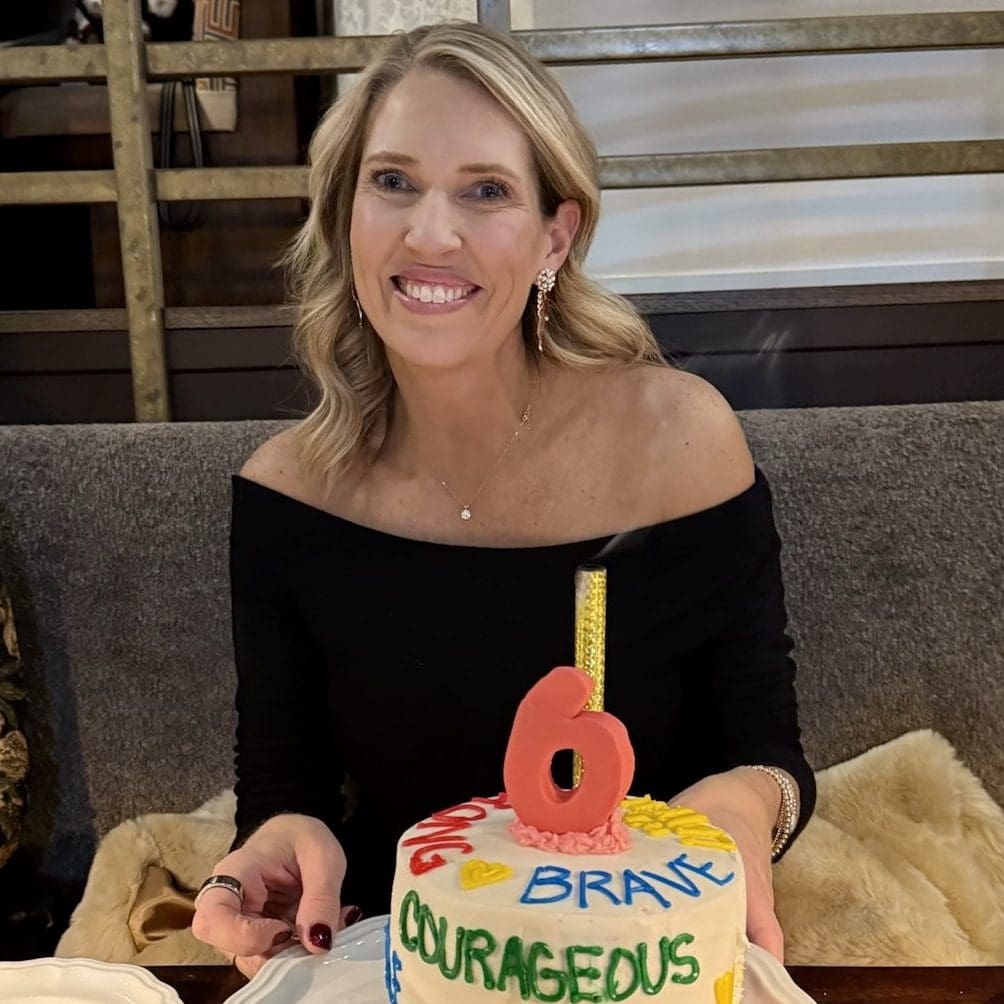
Six years since my stage IV EGFR lung cancer diagnosis
What No One Tells You
The day you are diagnosed along with the weeks that follow before you start treatment are brutal. It feels like the rug has been completely pulled out from under you. As someone diagnosed with lung cancer, at 50 years old or younger, you are more than likely being diagnosed with a cancer you never even knew you could get… the one cancer you thought you could protect yourself from. Your brain can’t keep up with what’s happening, and your body goes into survival mode. You may feel emotionally beat or like you’re watching your life from the outside of your body. There may be moments you don’t remember and conversations you can’t recall. I had someone visit me in the hospital a few days after my diagnosis, and to this day, I have no memory of it. That’s how overwhelming this time is. So if you feel numb, you are not alone. I believe that this is the true definition of survival mode.
The waiting matters
And then comes the waiting…waiting for biomarker/NGS testing results can feel like forever. It is one of the most surreal experiences to know you have cancer, but also know you’re not actively doing anything to treat or kill it. This is not how we are wired and it feels strange. Cancer feels urgent and it feels like something should be happening STAT. One important PSA: When it comes to biomarker testing, know this…tissue biopsy results are generally the most reliable, but blood biopsies (liquid biopsies or ctDNA tests) are often used as well. In a perfect world they are both done. At the very least if a blood biopsy is negative, a tissue biopsy should follow.
It turns out that this waiting matters. Taking the time to get your biomarker results before starting treatment is critical. Some treatments can actually cause the effectiveness of other treatments that may be better suited for your specific cancer to not work as well. As hard as it is, this waiting period is part of getting the best treatment for your cancer. Now is the time ask questions, especially about a second opinion. If your oncologist tells you that you don’t need a second opinion or won’t help you figure out where to go or who to see, that is a red flag. Not all oncologists or cancer centers are created equal. Getting a second opinion from an NCI-designated comprehensive cancer center can make a significant difference. These cancer centers tend to see more lung cancer patients and often have specialized oncologists, more access to clinical trials, and bigger support teams.
Build your A team
Speaking of teams, this is also the time to start building your A team. Who do you need on your A team? Do you want to preserve fertility before treatment? That matters for both men and women that are diagnosed at a younger age. What about palliative care? Let me say this loudly for the people in the back: PALLIATIVE CARE IS NOT HOSPICE. PALLIATIVE CARE DOES NOT MEAN YOU ARE DYING. Palliative care is there to help manage side effects and support your mental and emotional well-being. It is an added layer of care, not end-of-life.
People will show up differently
At the same time as you are dealing with all of the above, you will start to see people differently. Some people will show up for you in big and unexpected ways (even people you least expected). Others, who you were certain would be there, may pull away or avoid you. You need to hear this clearly…it is not you, it is them. Cancer brings up uncomfortable emotions, and you are now a living, breathing reminder that anyone with lungs can get lung cancer. That’s a reality some people simply don’t know how to face.
I would like to say this next sentence is not true…but you will also come face to face with the stigma of lung cancer. You may even feel it yourself. You may not want people to know. You will be asked, over and over again, if you smoked. If you say no, people will offer their own theories about how you “got” lung cancer. I have been told everything from cleaning supplies, to driving carpool, to running outside, to burning candles. It is all dumb. The truth is, at this time, no one fully knows why people 50 and younger are being diagnosed with lung cancer. If you take one thing from this…NO ONE DESERVES LUNG CANCER. Not based on past choices. Not based on habits. Not for any reason!
Would you feel ashamed and embarrassed if you were diagnosed with lymphoma? Of course not. So please, do not feel shame with your diagnosis. That is one negative feeling that we do not have time for!
Take care of yourself
Right now, your job is to take care of yourself. Your body is in fight mode. You may not feel well. You may have lost weight. You may be in pain. Give yourself the grace to rest, to eat, and to simply be. Let the people who offer to help you actually help you. Meals, laundry, rides for your kid…these things are very manageable when others are involved. Remember, people offer because they want to help. Think about how it feels when you help someone else…that’s the feeling you’re giving them.
After getting the results of your biomarker testing and learning what your treatment plan will be, talk to your care team about not only common side effect, but possible side effects of treatment ahead of time. Have prescription medications and/or over-the-counter medications and supplies ready so you’re not scrambling once side effects start.
Emotionally, I truly feel this diagnosis often follows the cycle of grief…shock, denial, anger, bargaining, depression, and eventually some form of acceptance. The truth is, this cycle doesn’t just happen once. It can repeat, skip phases, and show up when you least expect it. Prioritize your mental health. You may benefit from medication for anxiety or depression. I was started on Lexapro the day after my diagnosis. You may also find it helpful to speak with a mental health professional. Many oncology clinics have social works that are covered by your insurance available in the clinic. If not they should have a list of outside therapists to give you.
If your cancer is driven by an oncogene, which is common in those diagnosed at a younger age, targeted therapies (TKIs) may be your 1st line of treatment and the good news is they can work quickly. Sometimes within weeks people begin to feel physically better and see their symptoms improve. I remember being amazed by how quickly they started to work. Make sure you ask when your first scans will be after starting treatment so you can monitor how the cancer is responding.
Find your people
I cannot stress how important it is to find your people. Join a support group. Join a private Facebook group like the Young Lung Cancer Initiative Patient and Caregiver Group. Connect with others who share your specific biomarker through the biomarker groups and organizations. There is something incredibly powerful about talking to people who truly understand what you are going through. They just get your fears, your hope, and your experience in a way others simply can’t.
Your new normal
Over time, the fog will begin to lift. You will not be the same person you were before your diagnosis, but you will begin to settle into a new version of your life. Your new normal. Take the time to make memories, both big and small. Find joy in the simple moments. Rest when you need to. Learn what you can about your diagnosis, but don’t let it consume you. Protect yourself. Walk away from conversations, advice, or people that do not bring you comfort or joy. You will hear a lot of opinions, “miracle cures,” and stories from someone’s neighbor’s second cousin that are unhelpful. You do not have to listen to any of that. Side note, if you do think you want to try something someone tells you about, make sure to speak to your medical oncologist about the validity and how it may possibly interfere with your prescribed treatment.
You may have been told your cancer is incurable, but that does not mean your life is over. Take one day at a time. This diagnosis is not a sprint, it is a marathon. Remember that no two people, no two sets of genetics, no two cancer burdens, etc. are exactly the same so try not to fall down the rabbit hole of comparing your cancer or your experience to anyone else’s. Believe me, I know this is hard to do. Cancer is not easy. Lung cancer is not easy. Working, parenting, and adulting are not easy and when you add lung cancer to the equation it is only harder. With all that said some of the BEST people I have met are people that are fellow lung cancer patients. My diagnosis has also changed my priorities. Small problems truly are small problems and not fretted over. Birthdays are sweeter. Memories are love. If you are looking you will find bright spots where you least expect it.
XO, Leah
More from YLCI: Newly Diagnosed · Resource Directory · Biomarker & Subtype-Specific Organizations · Join the YLCI Circle