I was 43, had never smoked and didn’t recognize the symptoms of lung cancer because I didn’t even know that I could get lung cancer. Here’s what I wish I had known.

My first symptom of lung cancer was a dry cough.
Nothing dramatic. Nothing that made me think I could have lung cancer.
Then I started feeling like I couldn’t get a deep breath. I became short of breath while running and taking F45 classes. I developed pain in my right side and shoulder. I was tired, and I was losing weight.
Here’s the thing about symptoms: we don’t experience them in the neat order we find on a website. We experience them while living our lives.
I exercised a lot, so the weight loss made sense. I was a busy mom with three kids, so of course I was tired. I was 43 years old with no history of smoking—lung cancer wasn’t on my radar, and it wasn’t on the radar of the healthcare providers I was seeing either.
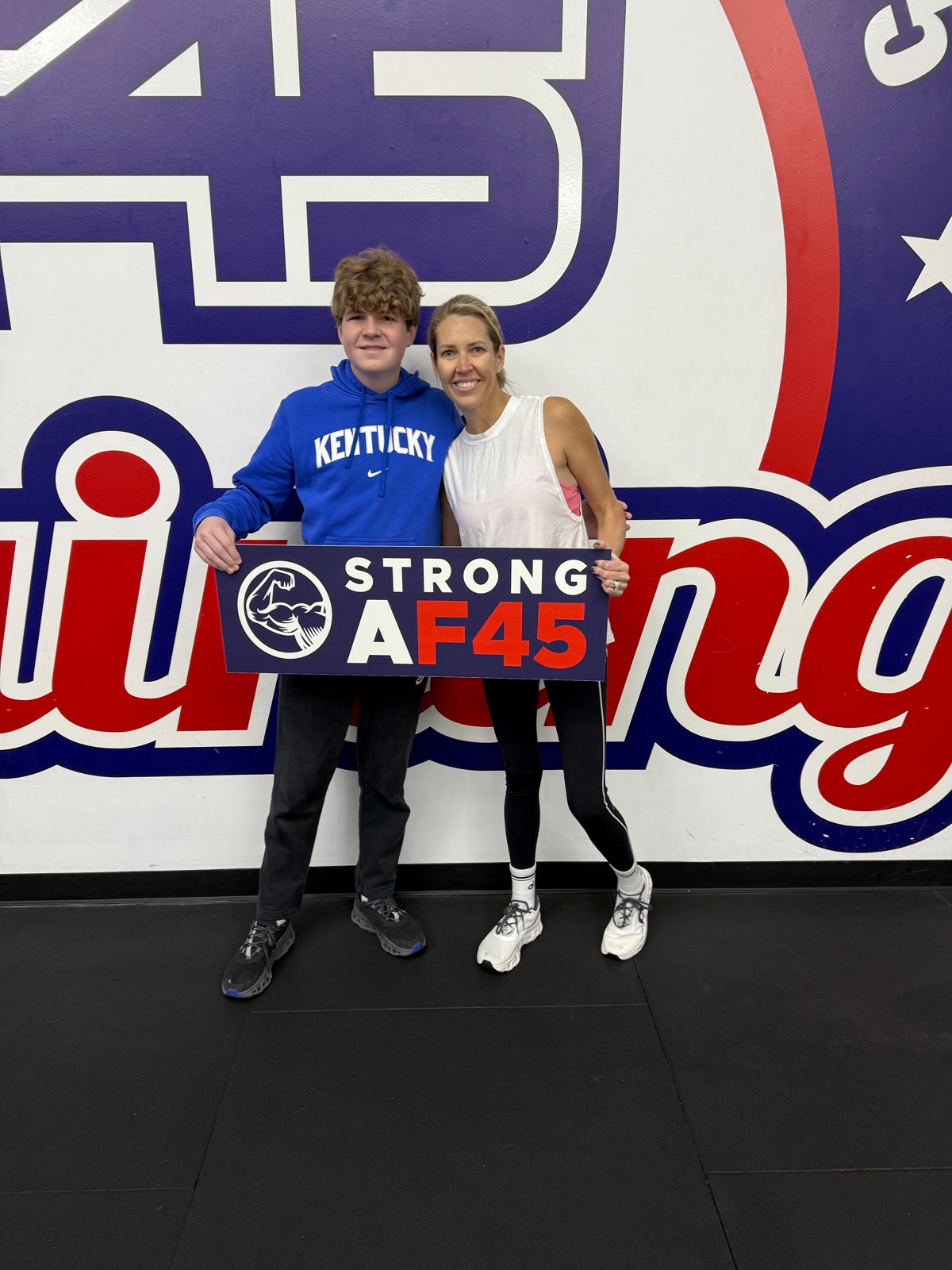
I received many diagnoses, including pneumonia. When that didn’t improve with antibiotics, I spent four days in the hospital receiving IV antibiotics. I went home thinking pneumonia was the problem and now I should be good. Three and a half weeks later, my symptoms were worse, so back to the hospital I went.
This time, I was diagnosed with stage IV non-small cell lung cancer.
Looking back, the signs were there. I just didn’t know they were signs of lung cancer.
Common Signs and Symptoms of Lung Cancer
Lung cancer symptoms can be subtle and easy to explain away. This graphic summarizes common warning signs.
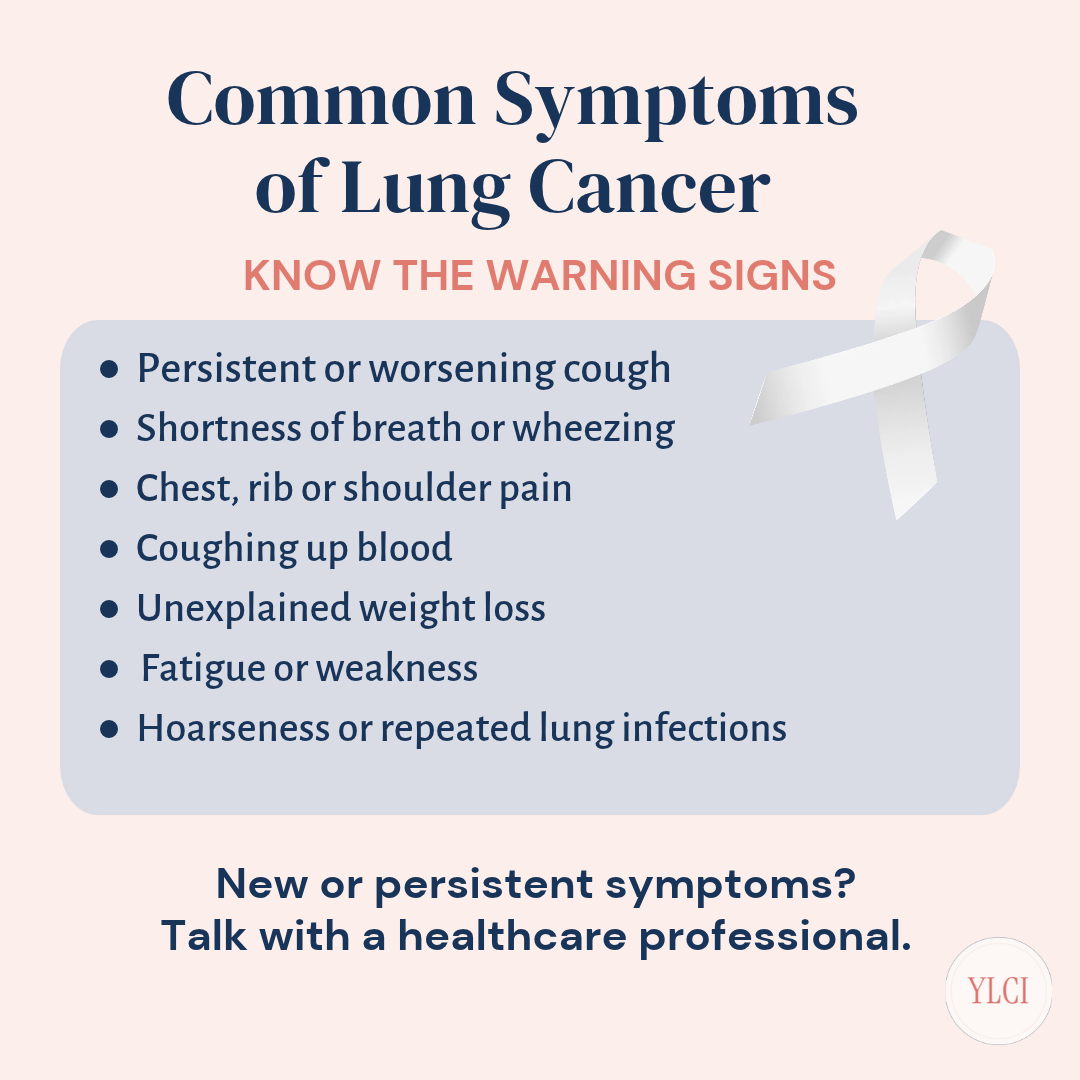
Having one, or even several, of these symptoms does not mean you have lung cancer. There are many more common explanations for all of them.
What matters is paying attention and noticing when something doesn’t go away, gets worse, keeps coming back or doesn’t improve with treatment.
I wish I had realized how important it was to know my baseline—and to pay attention when something felt different from my normal.
My shortness of breath mattered because it was different from my normal. I exercised regularly. I ran and took F45 classes. I knew what being out of breath from exercise felt like, and this was different.
The same was true for my weight loss and fatigue. In hindsight, I was losing weight without trying. At the time, though, I had a perfectly reasonable explanation for it.
That’s how symptoms can be missed.
When Lung Cancer Spreads
This one surprises a lot of people. It sure surprised me.
Lung cancer, if not detected early, commonly spreads—or metastasizes—to places including the bones, brain, liver and lymph nodes. When this happens, symptoms can come from where the cancer has spread rather than from the lungs themselves.
That can mean persistent back, hip, rib or shoulder pain, headaches, dizziness, balance problems, weakness or numbness, seizures, swollen lymph nodes or other unexplained changes become the symptoms of lung cancer.
Again, a headache or back pain does not mean you have lung cancer.
The reality is that lung cancer doesn’t always start with a cough or shortness of breath.
I had pain in my right side and shoulder along with my respiratory symptoms. By the time I was diagnosed, my cancer had already spread to my bones. A bone biopsy ultimately confirmed my diagnosis.
Lung Cancer Screening and Who Qualifies
Unfortunately, many people with lung cancer don’t have symptoms until the disease is at a late stage. That is why lung cancer screening is so important for people who qualify.
The American Cancer Society currently recommends annual screening with a low-dose CT scan for people ages 50–80 who currently smoke or previously smoked and have at least a 20 pack-year smoking history.
If you qualify, please get screened. Don’t wait for symptoms. Lung cancer found early is curable.
But what about everyone else?
I didn’t qualify for screening. I was 43 and had never smoked.
Unfortunately, not qualifying for lung cancer screening does not mean you can’t get lung cancer.
How to Describe Symptoms to Your Healthcare Provider
When you talk with your healthcare provider, be specific.
“My cough has lasted six weeks.”
“I normally exercise without a problem, and now I’m stopping to catch my breath.”
“I finished the antibiotic, but I’m still not getting better.”
These things matter.
When to Go Back to Your Healthcare Provider
There isn’t one magic symptom that means you have lung cancer.
Instead, ask yourself:
- Is this new?
- Is it getting worse?
- Has it been hanging around?
- Does it keep coming back?
- Is it affecting something I could normally do?
- Have I been treated for it but I’m still not getting better?
If the answer is yes, talk with your healthcare provider.
If you’ve already been seen for these symptoms but they continue or get worse, go back.
It doesn’t mean you have lung cancer, but it does mean something is not right and you still need answers.
Remember: knowledge is power.
Most coughs aren’t lung cancer. Most headaches aren’t brain metastases. Most shoulder pain isn’t cancer. But you know your body better than anyone else. Listen to it. Listen to your gut.
Pay attention when something changes. Pay attention when it doesn’t get better. Most of all, don’t be afraid to go back to your healthcare provider. Ask your questions. Get the answers.
I didn’t fit the stereotype of someone who gets lung cancer. I didn’t qualify for screening. I didn’t recognize my symptoms as possible signs of lung cancer.
Now I know differently. The reality is that if you have lungs, you can get lung cancer.
And hopefully, now you know a little more too.
If you or someone you love has recently been diagnosed, visit YLCI’s Newly Diagnosed page for practical next steps and support.
This is part one in a three-part series.
Next in this series: When You Know Something Isn’t Right: How to Advocate for Yourself
Part three: How Lung Cancer Is Diagnosed: The Tests That Get Answers
Sources: American Cancer Society, MD Anderson Cancer Center and U.S. Preventive Services Task Force.
This article is for educational purposes and is not a substitute for medical advice. Talk with a healthcare professional about new, persistent or worsening symptoms.